| HOME |
| GENERAL INFORMATION |
| IMPORTANT INFORMATION |
| PHOTO GALLERY |
Invited Speakers
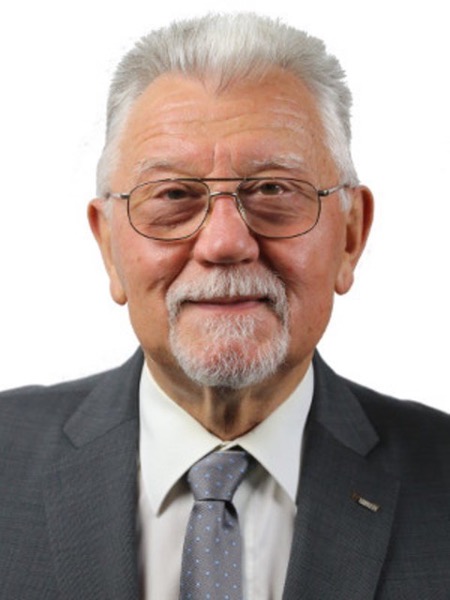 Prof. Dr. Ing. Dr. h. c. Vladimir Blazek is an internationally recognized biomedical engineer and researcher whose scientific career has focused on biomedical optics, cardiovascular diagnostics, and the development of non-invasive and unobtrusive methods for physiological monitoring. He is Professor Emeritus and Senior Advisor at the Chair for Medical Information Technology (MedIT), Helmholtz Institute for Biomedical Engineering, RWTH Aachen University.
He received his Ing. degree in Communication Techniques and Biomedical Engineering in 1969. He subsequently joined the Institute of High Frequency Technology at RWTH Aachen University, where he received his Dr.-Ing. degree in 1979. He completed his habilitation at the Faculty of Electrical Engineering, Czech Technical University in Prague in 1993 and was appointed Professor of Measurement Techniques there in 1995. In 2002, he received an honorary doctorate (Dr. h.c.) from the Czech Technical University in Prague. Since 2011, he has been affiliated with the Chair for Medical Information Technology (MedIT) at the Helmholtz Institute for Biomedical Engineering, RWTH Aachen University, where he is currently Professor Emeritus and Senior Advisor. His research interests span biomedical optics and optoelectronics, biomedical sensors, tissue optics and photon–tissue interaction, modelling and simulation of human hemodynamics, quantitative photoplethysmography, and optical imaging methods. A particular focus of his work has been the development of photoplethysmography (PPG) and optical imaging techniques for non-invasive assessment of peripheral circulation and cardiovascular function. Prof. Blažek pioneered photoplethysmography imaging (PPGI), introducing with his research group the first camera-based approach for non-contact, spatially resolved mapping of tissue perfusion in 2000. His early work established PPGI as a new imaging modality capable of extending conventional single-point photoplethysmography towards spatial assessment of local hemodynamic phenomena. His broader scientific activities have also addressed thermal imaging, optical coherence tomography, unobtrusive physiological sensing, pulse oximetry, and contactless cardiorespiratory monitoring. Over the course of his career, his scientific contributions have been recognized by numerous awards, including the I-R 100 Award for one of the 100 best optical systems of 1982, the Award of the Swiss Society for Phlebology, the German Society for Microcirculation Award, and the Erich Krieg Medal of the German Society for Phlebology. Prof. Blažek has authored or co-authored more than 350 publications and holds more than 40 patents and patent registrations in Germany and internationally. He has conducted research and teaching activities at universities in more than eight countries and has contributed to university and governmental commissions, scientific societies, and advisory boards of scientific journals. His scientific career bridges fundamental biomedical optics, engineering innovation, and clinical cardiovascular diagnostics, with particular emphasis on translating optical measurement principles into practical methods for non-invasive and contactless monitoring of human physiology. |
| Lecture: Photoplethysmography Imaging in unobtrusive cardio- vascular function monitoring: Historical remarks, selected results and new horizons
Content: The lecture will trace the development of photoplethysmography from classical contact-based PPG towards camera-based photoplethysmography imaging (PPGI). Starting with selected historical milestones in PPG sensor technology, it will introduce the biomedical fundamentals of light–tissue interaction and PPG signal genesis. Particular attention will be given to the transition from single-point measurements to contactless imaging, where individual camera pixels can be considered as spatially distributed PPG sensors, enabling the assessment of local hemodynamic phenomena that cannot be captured by conventional PPG. The principles of PPGI perfusion mapping based on spatial variations in signal amplitude and phase will be illustrated through selected experimental results and practical experiences. Finally, emerging clinical application scenarios and future perspectives of PPGI as an unobtrusive method for cardiovascular function monitoring will be discussed. Outcome: An understanding of the fundamental principles and historical development of photoplethysmography, the transition from conventional PPG to camera-based PPGI, and the unique possibilities offered by spatially resolved perfusion imaging. The lecture will provide insight into selected experimental applications and the future potential of PPGI for unobtrusive cardiovascular monitoring and clinical diagnostics. |
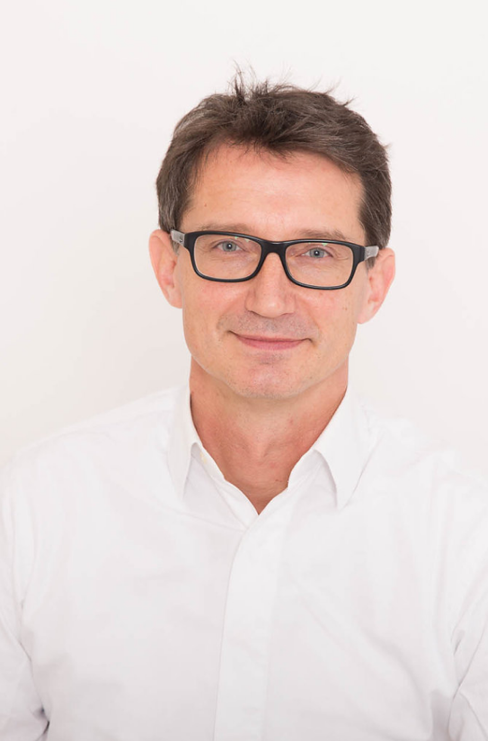 Dr. Paul Blazek is a serial entrepreneur, innovator, and researcher whose work focuses on understanding how changing user needs shape the development, customization, and scaling of products, services, and business models. His core areas of expertise include innovation ecosystems, digital transformation, startup business models, mass customization, open innovation, interactive value creation, customer activation and engagement, and user experience design.
He is the founder and CEO of CYLEDGE Media Group, a research-driven digital agency and innovation accelerator headquartered in Vienna, with offices in Bern and Berlin. CYLEDGE combines expertise in customization, open innovation, sustainability, and user experience to support customer-centric digital transformation and co-innovation. Over nearly two decades, the company has delivered more than 300 projects for clients across a broad range of industries. Paul Blazek has co-founded nine technology startups and has more than 25 years of entrepreneurial experience, providing him with first-hand insight into both the success factors and challenges involved in transforming innovative ideas into viable and scalable business models. His current entrepreneurial activities include the Co-Innovation Factory, an initiative transforming parts of a former major European bread factory into an innovation center and a new hub within the Austrian innovation ecosystem. Alongside his entrepreneurial activities, Paul is active in teaching, research, and mentoring. He teaches Customer Experience Management and Open Innovation at the Lucerne University of Applied Sciences and Arts (HSLU) and is an affiliated researcher at RWTH Aachen University. He has served as a mentor for the Harvard Entrepreneurship Program and the European initiative enpact. He is a founding member of the International Institute on Mass Customization and Personalization (IIMCP), an appointed member of MIT’s Smart Customization Group, and a research fellow of the Peter Pribilla Foundation. He is also one of the long-standing chairs of the International Conference on Customization and Personalization (MCP-CE). His professional activities bridge academic research and entrepreneurship, with a particular emphasis on translating emerging technologies and research ideas into customer-focused innovation and sustainable business models. |
| Lecture: The Innovator Mindset: From Research Ideas to Innovation Business Models
Content: The evolution of innovation: From ideas and research to market impact The Innovator DNA: Key capabilities, mindsets and patterns behind successful innovation Lessons learned: Why promising research ideas fail to become successful innovations From insight to value: Connecting research, customer needs, technology and business opportunities Innovation business models: How to turn emerging ideas into scalable value propositions Outcome: An understanding of the core elements of the Innovator DNA and the critical success factors for transforming research and innovation ideas into customer-focused, viable business models. |
 Dr. Yahia Achour is an Associate Professor at the École Militaire Polytechnique (EMP) in Algiers, Algeria. His research interests include pulsed power technology, power electronics, high-voltage engineering, and biomedical applications of pulsed electric fields. His research has focused on developing compact solid-state high-voltage pulse generators, including SiC-MOSFET-based Marx generator architectures, to generate controllable nanosecond pulsed electric fields. His recent research also addresses electrical modelling of biological cells and electroporation for biomedical and cancer treatment applications. Dr. Achour has extensive international research experience and has collaborated with several Polish research institutions, including the Military University of Technology and Warsaw University of Technology.
|
| Lecture: Pulsed power generator for bioengineering applications |